The IEA’s Latest Outlook Points to a Shift from Expanding Supply to Strengthening the Value Chain
For much of the past decade, the industry’s priority was straightforward: secure enough critical minerals to support the energy transition.
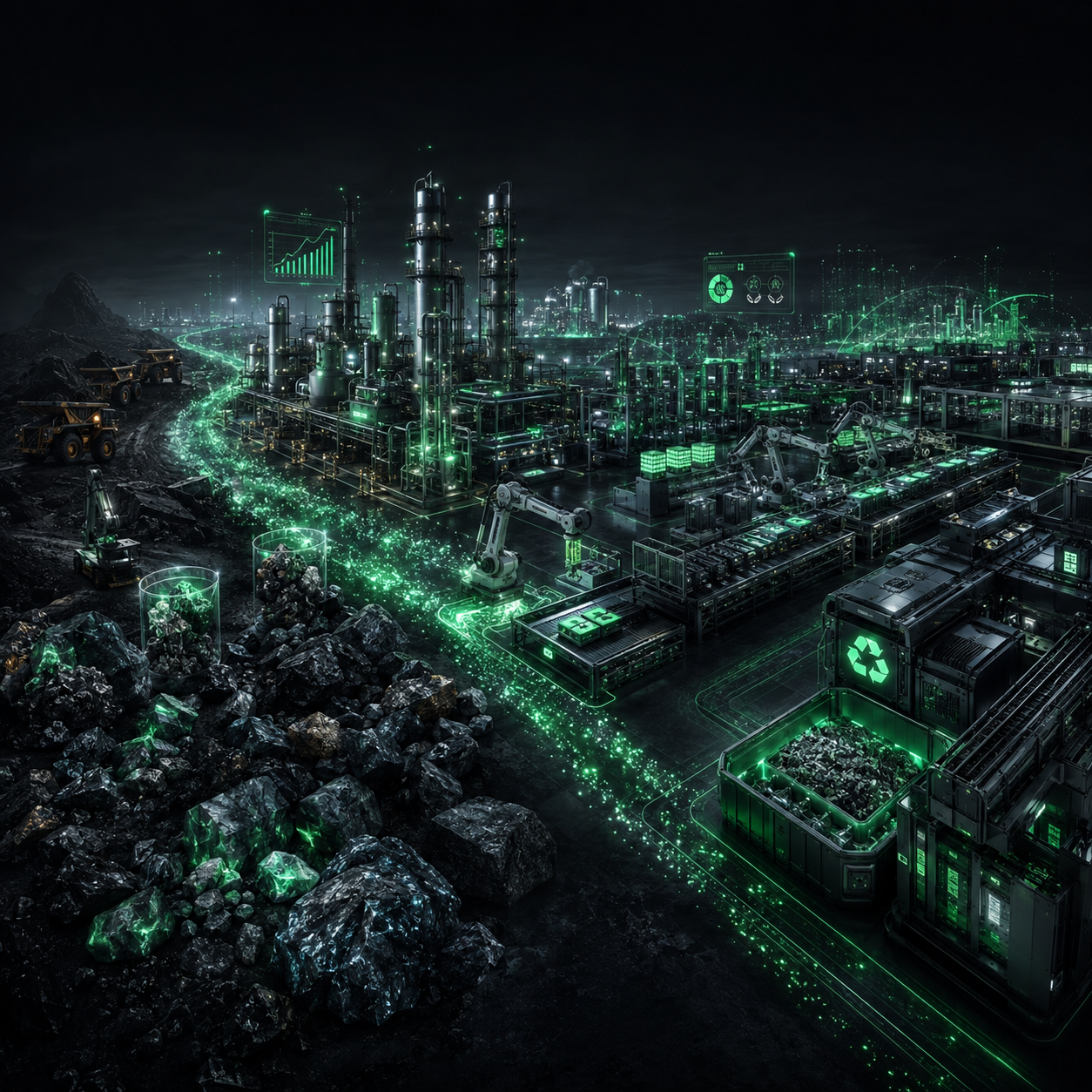
The International Energy Agency’s Global Critical Minerals Outlook 2026 suggests that this priority is evolving. While mining capacity continues to expand, the report identifies a growing imbalance between upstream production and the downstream infrastructure needed to refine, process, manufacture, and recycle battery materials.
For companies across the battery value chain, the next phase of investment may be defined less by resource availability and more by how effectively those resources move through the value chain.
Mining Capacity Is Expanding Faster Than Downstream Infrastructure
The IEA projects continued growth in mining across several critical minerals, helping narrow long-term supply gaps for commodities such as lithium and copper.
However, downstream investment is not advancing at the same pace.
Outside dominant producing regions, planned cathode manufacturing capacity represents only a fraction of projected lithium mining capacity. Similar gaps are emerging across rare earth supply chains, where refining and magnet production continue to trail expected mine output.
The result is a value chain that is expanding unevenly.
Refining Is Becoming a Strategic Investment Priority
The report highlights that refining capacity remains highly concentrated for many battery materials, with a small number of countries accounting for most global processing growth.
At the same time, export controls, trade restrictions, and evolving industrial policies are increasing the importance of geographically diversified processing capacity.
For battery manufacturers, securing access to refined materials is becoming just as important as securing access to the minerals themselves.
Implications Across the Battery Value Chain
Mining
As new mining projects advance, greater attention will be needed to ensure refining and manufacturing capacity expands alongside mineral production.
Processing and Refining
Refining is becoming a strategic capability that supports supply chain resilience, diversified sourcing, and long-term industrial competitiveness.
Battery Manufacturing
Manufacturers are increasingly evaluating suppliers based on processing capability, traceability, and supply chain resilience alongside cost and production capacity.
Equipment and Technology
Additional investment in refining and downstream manufacturing is expected to increase demand for processing equipment, automation, quality assurance systems, and digital manufacturing technologies.
Recycling
Recycling continues to evolve into a strategic source of critical materials, strengthening circular supply chains while reducing dependence on primary extraction.
Investment Trends Are Beginning to Shift
The report also shows that investment patterns are changing.
Critical mineral investment declined in 2025, with battery metals experiencing the sharpest reduction in capital spending. At the same time, governments significantly increased public financing commitments to strengthen domestic supply chains and encourage private investment in strategic projects.
These developments indicate a growing emphasis on building resilient industrial ecosystems rather than simply expanding extraction capacity.
Questions Executive Teams Should Be Asking
Capital Allocation
Does our investment strategy extend beyond resource access to include refining, processing, and manufacturing capabilities?
Supply Chain Development
Where are the largest gaps between future mineral supply and downstream industrial capacity?
Competitive Position
Will future market leadership depend on production volume, or on the ability to integrate multiple stages of the value chain?
Long-Term Resilience
How can downstream investment reduce exposure to geopolitical disruption and changing trade policies?
Executive Perspective
The IEA’s latest outlook suggests that the industry’s competitive landscape is changing.
Mining remains essential, but future growth will increasingly depend on the infrastructure that transforms critical minerals into battery-ready materials. Companies that invest across refining, processing, manufacturing, and recycling will be better positioned to build resilient supply chains and respond to evolving market and policy conditions.
For leaders across the battery value chain, the next investment opportunity may not lie in producing more raw materials, but in strengthening the connections that turn those materials into commercial products.