Sodium-ion batteries have moved from laboratory curiosity to commercial product faster than most analysts predicted, with CATL, BYD, and HiNa Battery all shipping cells at scale by the close of 2025. CATL’s first-generation sodium-ion cell — delivering an energy density of 160 Wh/kg — entered mass production in Q3 2025 for integration into Chery’s iCar brand of compact EVs, while the company has confirmed a second-generation cell targeting 200 Wh/kg for 2026. The developments mark the arrival of a battery chemistry that sidesteps lithium entirely, relying instead on sodium — one of the most abundant elements on Earth.
The Technical Case for Sodium
Sodium-ion cells share structural similarities with their lithium-ion counterparts: both use intercalation cathodes, carbon-based anodes, and liquid organic electrolytes. The key difference is the charge carrier. Sodium ions are larger and heavier than lithium ions, which reduces energy density at the cell level. However, sodium-ion cells offer compensating advantages that are significant for specific applications.
- Raw material cost: Sodium carbonate trades at $150–$200 per ton, compared with $10,000–$15,000 per ton for battery-grade lithium carbonate
- Cold-weather performance: Sodium-ion cells retain over 90% of room-temperature capacity at –20°C, versus 60–70% for standard LFP cells
- Safety: Cells can be discharged to 0 volts for transport without degradation, simplifying logistics
- Supply-chain independence: No lithium, cobalt, or nickel required in the most common formulations
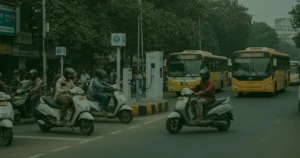
The tradeoff is energy density. At 160 Wh/kg, CATL’s current sodium-ion cell sits below the 180–200 Wh/kg range typical of lithium iron phosphate (LFP) cells. That gap limits sodium-ion’s suitability for long-range passenger EVs today, but it is sufficient for urban micro-EVs, two-wheelers, and stationary energy storage — segments that collectively represent hundreds of gigawatt-hours of annual demand.
Industry Momentum Beyond CATL
CATL is not alone. HiNa Battery, a spinoff from the Chinese Academy of Sciences, began commercial production at its 1 GWh factory in Shanxi Province in 2024, supplying cells to JAC Motors for a compact EV with a 250 km rated range. BYD has filed patents for sodium-ion pouch cells and disclosed a 2026 production target, though specific capacity figures have not been released.
Outside China, Sweden’s Northvolt announced a sodium-ion development program in partnership with Altris, targeting grid-storage applications in the European market. In India, Reliance Industries has committed $1.2 billion to a battery complex in Jamnagar that includes a dedicated sodium-ion production line, with commissioning expected in 2027.
“Sodium-ion is not going to replace lithium-ion for premium EVs anytime soon. But for the segments that need low cost, cold-weather reliability, and resource security — which is the majority of global mobility — it is an extremely compelling proposition.” — Dr. Shirley Meng, professor of materials science, University of Chicago
What Comes Next
The trajectory of sodium-ion technology hinges on two variables: energy density improvements and manufacturing scale. CATL’s announced 200 Wh/kg target for its second-generation cell, if achieved, would bring sodium-ion into direct competition with entry-level LFP packs for mainstream EVs. Parallel work on hard-carbon anode optimization and Prussian blue analog cathodes at multiple Chinese universities suggests further gains are plausible within a three-to-five-year window.
On the manufacturing side, global sodium-ion production capacity will reach 50 GWh by the end of 2027, according to estimates from Wood Mackenzie. While that figure is modest compared with the 2,000+ GWh of lithium-ion capacity now online globally, it reflects a chemistry that was essentially noncommercial as recently as 2023. The pace of its adoption will serve as a barometer for how quickly the battery industry can diversify beyond lithium dependence.