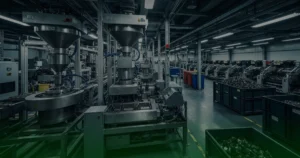
German battery recycling startup Cylib has secured a €63.4 million grant from Germany’s Federal Ministry for Economic Affairs and Climate Action (BMWK), the largest single public investment in a European battery recycling company to date. The funding will support construction of Cylib’s first commercial-scale facility in North Rhine-Westphalia, designed specifically to process lithium iron phosphate (LFP) batteries—a chemistry that has rapidly gained market share but remains underserved by existing recycling infrastructure.
The grant, announced in December 2025, represents a decisive policy signal from Berlin. LFP batteries, which contain no cobalt or nickel, have been widely viewed as less economically attractive to recycle than nickel-manganese-cobalt (NMC) alternatives because their constituent materials carry lower market values. The BMWK’s decision to subsidize LFP-specific recycling capacity confirms that European policymakers are prioritizing strategic resource independence over short-term recycling economics.
Why LFP Recycling Matters Now
LFP batteries have experienced a dramatic rise in adoption. In 2025, LFP chemistry accounted for 40% of global EV battery installations, up from just 18% in 2020, driven by lower costs, improved energy density, and longer cycle life. Tesla, BYD, Volkswagen, and Ford have all incorporated LFP packs into their vehicle lineups, and CATL’s LFP-based Qilin and Shenxing batteries have become bestsellers in the Chinese market.
Yet the recycling sector has been slow to adapt. Most commercial-scale recyclers in Europe and North America—including Umicore, Redwood Materials, and Li-Cycle—have optimized their processes for NMC batteries, where the high value of recovered cobalt and nickel provides strong economic incentives. Recovering lithium and iron phosphate from LFP cells yields lower-value outputs, and conventional hydrometallurgical processes are not always cost-effective for this chemistry.
“The market has been telling us that LFP batteries are cheap to make but expensive to recycle. That equation has to change, because LFP is now the dominant chemistry in the world’s largest EV market and growing rapidly in Europe. Ignoring LFP recycling means ignoring the majority of the future waste stream.” — Lilian Schwich, Co-founder and CEO, Cylib
Cylib’s Technology and Facility Plans
Cylib, spun out of RWTH Aachen University in 2022, has developed a water-based mechanical recycling process that the company says can recover over 95% of lithium from LFP batteries—a significant improvement over the 50–70% lithium recovery rates typical of conventional pyrometallurgical methods. The process operates at lower temperatures than smelting-based approaches and avoids the use of strong acids, reducing both energy consumption and chemical waste.
The new facility, slated for construction beginning in mid-2026, will have an initial annual processing capacity of 30,000 tonnes of end-of-life batteries and production scrap. Cylib plans to produce battery-grade lithium carbonate and iron phosphate that can be fed directly back into cathode manufacturing—closing the loop for LFP materials within Europe.
- Location: North Rhine-Westphalia, in proximity to Germany’s automotive manufacturing corridor and existing chemical industry infrastructure
- Expected commissioning: Q2 2027, with ramp-up to full capacity by early 2028
- Job creation: 250 direct positions, with additional roles in logistics and material processing
- Total project cost: Estimated at €150 million, with the BMWK grant covering 42% of the capital expenditure
A Broader European Strategy
The Cylib grant fits within a broader European effort to build sovereign battery recycling capacity. The EU Battery Regulation requires that by 2031, new batteries sold in Europe must contain minimum levels of recycled lithium, cobalt, and nickel. Meeting these thresholds will require a functioning European recycling industry capable of producing battery-grade materials at scale.
Germany has been particularly active. In addition to the Cylib grant, BMWK has approved funding for SungEel HiTech’s planned facility in Saxony and has supported pilot projects at BASF’s Schwarzheide recycling plant. France, through its France 2030 initiative, has backed Eramet’s hydrometallurgical recycling facility in Dunkirk, while Sweden’s Northvolt has integrated recycling operations into its Revolt Ett facility.
The combined effect is a European recycling sector that is beginning to attract the kind of capital and policy support previously concentrated in battery cell manufacturing. Whether this investment arrives quickly enough to process the first major wave of end-of-life EV batteries—expected around 2028–2030—will be a defining test for Europe’s circular economy ambitions.